The best painting weather is short in New England, and the best painters book up early.
Every spring we hear from homeowners hoping to have their house painted “this summer,” only to find that most quality contractors are already booked. Here is how timing really works for exterior painting on the North Shore, and how to plan so your project happens when you want it to.
The painting season
Exterior paint needs the right conditions to cure properly: moderate temperatures, dry surfaces and no overnight frost. In Massachusetts, that typically means late spring through early fall. Coastal humidity, morning dew and fall cold snaps narrow the window further, so a good painter schedules carefully around them.
How we know a surface is ready
A nice day isn’t enough on its own. Before any primer or finish goes on, our crews check two things:
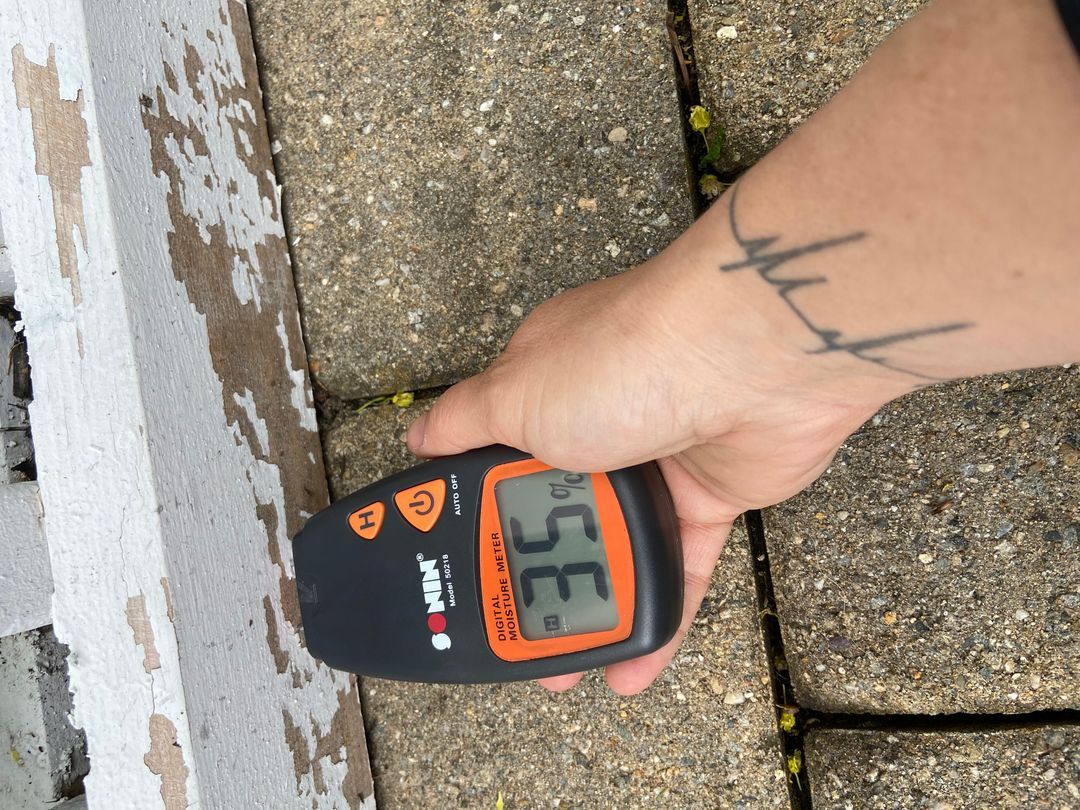

Moisture meter and infrared thermometer checks before any finish goes on.
We test the siding and trim. Wood still holding moisture from rain, dew or a recent wash will push paint off from behind, causing blistering and peeling. We wait until readings are within the paint manufacturer’s recommended range.
We read the temperature of the surface itself, which can differ greatly from the air, on shaded walls in the morning or sun-baked walls in the afternoon. Paint applied too cold or too hot won’t cure properly.
These quick checks are part of why a well-timed exterior lasts years longer than a rushed one.
Why winter is the time to book
Experienced, well-reviewed painting companies usually fill their spring and early summer calendars over the winter. Booking in winter gives you:
- Your choice of start dates rather than whatever is left in the fall.
- Time to choose colors properly, with samples tested on the house as soon as weather allows.
- Time to coordinate carpentry repairs, roofing or landscaping that should happen before painting.
What to do before you call
Take a ten-minute walk around the house and photograph anything you notice:
- Cracked or pulling caulk at windows, corner boards and trim joints.
- Peeling paint at sills and the bottom edges of clapboards, which often points to moisture.
- Rot or soft wood, especially at sills, door casings and railings.
- Gutters overflowing onto trim.
Photos make for a faster, more accurate first conversation.
What a quality exterior job includes
The paint is the last step. A lasting exterior depends on protecting landscaping and surfaces, careful scraping and sanding, washing, repairs, priming bare wood and quality topcoats applied in the right conditions. We walked through our full process in our Fine Homebuilding cover story.
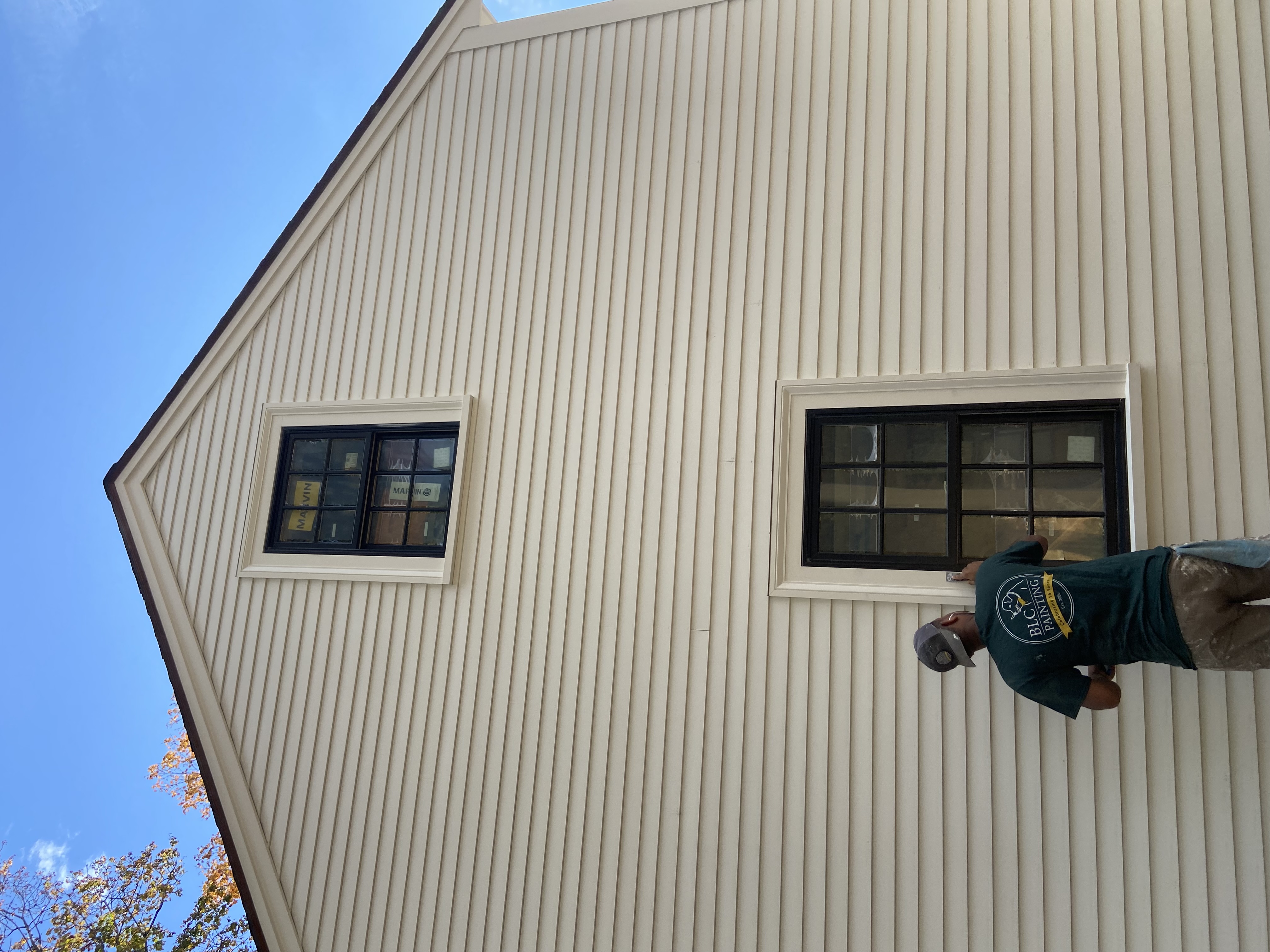
Prep comes first: a BLC crew member preparing the exterior.
Planning an exterior for next year?
The best time to start the conversation is now, while spring dates are still open.
Schedule a walkthrough— Brooke, Founder & Owner, BLC Painting